
Key Facts
- Charcoal toothpaste may remove surface stains from coffee, tea, or wine but does not whiten teeth permanently or change their natural color.
- Many charcoal toothpastes lack fluoride, which is essential for preventing cavities and strengthening enamel, making them less protective than regular toothpaste.
- Charcoal is abrasive; frequent use can erode enamel, cause tooth sensitivity, and even leave teeth looking more yellow over time.
- Safe use is limited to once or twice a week with gentle brushing, while daily use should be with fluoride toothpaste; professional whitening remains the safer long-term option.
There is charcoal toothpaste everywhere. Instagram influencers claim to have a brighter smile and instant teeth whitening when they pose with it. Pharmacies display rows of sleek, black tubes that promise “natural detox” and white, healthy teeth. However, does charcoal toothpaste actually work, or is it merely a fad that is being marketed? Almost every day as dentists, we encounter patients who are interested in charcoal toothpaste and wonder if it’s a marketing ploy or a miracle product. To determine whether charcoal toothpaste merits a place in your oral hygiene regimen, let’s cut through the hype and get to the facts.
A study by ncbi in 2021 on charcoal toothpaste proved that the marketing lines of charcoal whitening toothpaste is wrong because it has not shown significant result in whitening the teeth. It shows similar results as fluoride toothpaste. However you can use charcoal toothpaste and continue reading to know more about that.
What Does Charcoal Toothpaste Do?
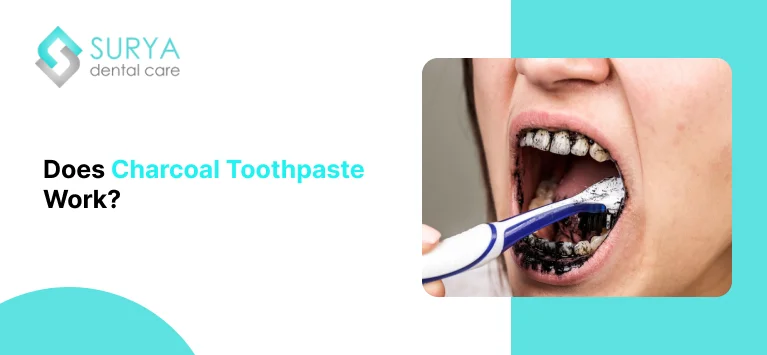
Charcoal toothpaste contains activated charcoal, a fine black powder made by heating carbon-rich materials like coconut shells. In toothpaste, it claims to absorb toxins and lift stains off teeth, giving them a whiter look. Charcoal’s porous nature helps bind particles, which is why it’s used in emergency rooms to treat poisoning. On teeth, it can help remove surface-level stains from coffee, tea, and wine. But it’s important to note that it doesn’t change your natural tooth color or bleach teeth.
Is Charcoal Toothpaste Good for Your Teeth?
This is where things get complicated. Using charcoal toothpaste to help get rid of surface stains will make your teeth look cleaner. But appearances can be deceiving. Fluoride is essential for strengthening enamel and preventing cavities, but it is absent from many brands of charcoal toothpaste. Without fluoride, your teeth become more susceptible, regardless of how white they seem. Some patients claim to feel cleaner after using charcoal toothpaste, but this sensation isn’t always a sign of real improvements in oral health.
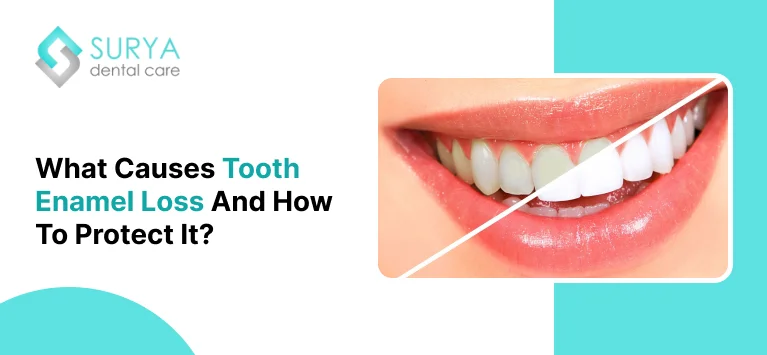
Charcoal toothpaste is also abrasive. Brushing vigorously can scratch enamel even though it helps remove stains. Enamel erosion results in tooth sensitivity, dullness, and an elevated risk of cavities. Whitening is not worth it if it causes damage to your enamel.
Is Charcoal Toothpaste Safe?
Charcoal toothpaste isn’t toxic, but that doesn’t make it entirely safe. If used too often, it can wear down enamel, exposing the yellow dentin underneath, making your teeth look more yellow over time, the exact opposite of what you’re aiming for. Charcoal particles can also get stuck in the gumline, causing irritation in some people.
The dark residue is another issue. It can stain dental restorations like veneers or white fillings, making them stand out against your natural teeth. If you have crowns, composite fillings, or veneers, charcoal toothpaste may not be your best option.
Can You Use Charcoal Toothpaste Every Day?
It is not recommended to use charcoal toothpaste on a daily basis. It can harm your enamel if used excessively and is too abrasive for daily use. Try charcoal toothpaste only once or twice a week with a soft-bristled toothbrush and light pressure. On other days, use it in conjunction with fluoride toothpaste to shield your teeth and avoid cavities.
Using charcoal toothpaste every day won’t give you the Hollywood results you’re looking for if you want a whiter smile. It will, at most, get rid of minor surface stains. In the worst case scenario, it may cause your teeth to become sensitive, discolored, and vulnerable to decay.
Is Charcoal Toothpaste Safe for Gums?
Your gums deserve attention here too. Abrasive particles in charcoal toothpaste can irritate your gums, especially if you already have gingivitis or sensitive gums. Gum recession can worsen with abrasive brushing, exposing more tooth surface to potential damage. Some patients report black specks getting trapped near the gumline, which can be hard to clean and may lead to discomfort or inflammation if not removed properly.
Does Charcoal Toothpaste Whiten Teeth Permanently?
Charcoal toothpaste has a short-term brightening effect and can remove surface stains. It doesn’t permanently whiten teeth or alter their internal color, which is frequently the reason for more severe discoloration. Contrarily, under a dentist’s supervision, professional whitening procedures employ peroxide-based chemicals to safely lighten the tooth’s interior color.
Charcoal toothpaste is not a long-term solution if you’re looking for actual teeth whitening. It’s similar to cleaning your teeth with sandpaper; while you might see short-term improvements, the risk of long-term harm is too great.
Alternatives to Charcoal Toothpaste
Take into account these options if you wish to whiten your teeth in a safe manner. While preserving enamel, whitening toothpaste containing fluoride and mild abrasives can aid in stain removal. Your teeth can be safely lightened several shades while preserving your oral health with professional whitening procedures at a dental office.
Your teeth will naturally look whiter if you use fluoride toothpaste on a regular basis, cut back on coffee and tea, and quit smoking. In addition to removing tartar and stains, dental cleanings every six months help to brighten teeth without endangering enamel.
When to Talk to a Dentist
It’s best to consult your dentist if you’re considering using charcoal toothpaste or if you’re worried about discolored teeth. We can evaluate the condition of your enamel, go over the safest whitening solutions, and create a customized plan that will preserve your teeth while giving you a whiter smile.
Whitening products are frequently perceived by patients as a one-size-fits-all solution. They’re not. How safe and effective whitening options are for you depends on your lifestyle choices, dental health, and enamel thickness.
The Bottom Line on Charcoal Toothpaste
Charcoal toothpaste might help lift minor stains if used sparingly, but it’s not a magic whitening solution. It can cause enamel erosion and sensitivity if overused. Also the main drawback is it lacks fluoride, which your teeth need the most to stay healthy.
Whitening your teeth shouldn’t come at the cost of damaging them. A bright smile is great, but a healthy smile is better. Choose your whitening products wisely, and remember surya dental care’s dentists can guide you toward safer, more effective solutions that won’t cost your enamel.
FAQs
Using charcoal toothpaste every day is generally not recommended. While it can help remove surface stains, charcoal is abrasive and may wear down enamel with frequent use. Dentists often suggest limiting it to a few times per week and using a fluoride toothpaste daily to protect enamel and prevent cavities.
Charcoal toothpaste can be good for occasional whitening and stain removal, but it is not ideal as a primary toothpaste. Many formulas lack fluoride, which is essential for cavity prevention. For long-term oral health, it’s best to use charcoal toothpaste sparingly and rely on a fluoride-based toothpaste for daily brushing.