
Key Facts
- Overdenture implants combine the stability of implants with the affordability and removability of dentures, making them ideal for full-arch tooth replacement.
- They provide superior stability, better chewing efficiency, bone preservation, natural appearance, and long-term comfort compared to traditional dentures.
- The procedure involves 2–4 implants per arch, followed by abutment attachment and fabrication of a custom overdenture that snaps securely into place.
- Candidates include patients missing most or all teeth, those unhappy with loose dentures, and individuals with adequate bone or willing to undergo grafting.
Replacing comfort, function, and the appearance of missing teeth matters more than ever. Also, no need to worry about the missing teeth, and it is not an end to eating hard foods as there are a lot of replacement methods followed in dental implants. Among them, one of the most innovative advancements in dental prosthetics is overdenture implants. It is a hybrid solution that bridges the gap between traditional dentures and fixed implants.
If you’ve been struggling with loose, uncomfortable dentures and are looking for tooth replacement options, then overdenture implants might be the ideal solution for you.
This article by Surya Dental Care implant specialists explains what an implant overdenture is, highlights the implant overdenture steps, and shows why this option is considered the gold standard for a confident, secure, and natural-looking smile.
What Is an Implant Overdenture?
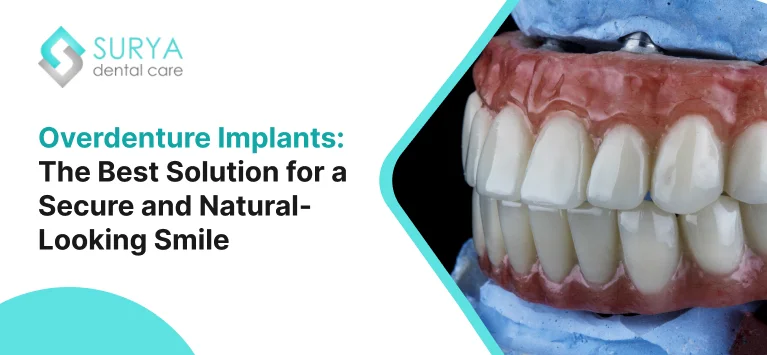
An implant overdenture is a type of removable denture that is securely anchored to dental implants placed in your jawbone. Overdentures offer better retention and stability than traditional dentures because they snap onto implants, whereas traditional dentures simply rest on your gums. So it relies on suction or adhesives.
This system combines the best of both worlds:
- The affordability and removability of dentures
- The firmness and bone-stimulating benefits of implants
Patients often choose overdenture implants for the upper or lower jaw (or both), especially when they need a full arch of teeth replaced. It’s an ideal solution for those who have lost all or most of their teeth but still have enough bone structure to support implants.
Why Choose Overdenture Implants?
Overdenture implants offer numerous benefits over traditional dentures or even individual implants. The benefits are,
- Superior Stability
- Improved Chewing Efficiency
- Bone Preservation
- Enhanced Speech
- Natural Appearance
- Long-Term Comfort
1. Superior Stability
The biggest issue with conventional dentures is movement during speaking or chewing. Implant-supported overdentures stay firmly in place. So it enhances both function and confidence.
2. Improved Chewing Efficiency
Overdenture provides better anchorage. So patients can enjoy a wider variety of foods without fear of slippage or discomfort. This can lead to improved nutrition and digestion.
3. Bone Preservation
Implants stimulate the jawbone. So, overdentures prevent the bone loss that typically occurs with missing teeth. Traditional dentures do not offer this benefit.
4. Enhanced Speech
A secure overdenture minimizes clicking sounds or speech impediments commonly associated with loose-fitting dentures.
5. Natural Appearance
Modern overdentures are designed to look like natural teeth and gums. With proper customization, they can restore your smile to its full beauty.
6. Long-Term Comfort
The secure fit reduces gum irritation and discomfort. Additionally, patients often report increased confidence in social situations.
Implant Overdenture Steps
The steps for implant overdenture can help you understand the treatment journey. Here’s how the process generally unfolds,
- Initial Consultation and Evaluation
- Treatment Planning
- Implant Placement Surgery
- Temporary Denture (Optional)
- Attachment of Abutments
- Fabrication of the Overdenture
- Final Placement and Adjustment
- Follow-Up and Maintenance
1. Initial Consultation and Evaluation
The journey begins with a thorough examination by a dental implant specialist. The examination includes,
- A review of your medical and dental history
- Digital X-rays or a CT scan
- Evaluation of your jawbone density
This step helps determine if you’re a good candidate for overdenture implants.
2. Treatment Planning
Once candidacy is confirmed, your dentist will develop a personalized treatment plan, including the number of implants needed (usually 2 to 4 per arch) and the type of overdenture that suits your needs.
3. Implant Placement Surgery
Dental implants are surgically inserted into the jawbone. This minor surgical procedure is often performed under local anesthesia and has a high success rate. Healing and osseointegration (the process where implants fuse with the bone) typically take 3 to 6 months.
4. Temporary Denture (Optional)
While your implants heal, you may be provided with a temporary denture to maintain appearance and function.
5. Attachment of Abutments
Once the implants have fully integrated, small connector pieces called abutments are attached. These serve as the interface between the implants and the overdenture.
6. Fabrication of the Overdenture
Impressions are taken to design a custom-fitted overdenture that matches your mouth perfectly. Your dentist will also work with you to choose the color, shape, and size of the artificial teeth for the most natural look.
7. Final Placement and Adjustment
The completed overdenture is snapped onto the implants, and your dentist will make final adjustments to ensure a comfortable, secure fit.
8. Follow-Up and Maintenance
Regular follow-up visits are essential to monitor the implants and maintain the health of surrounding tissues. With proper care, overdenture implants can last for decades.
Who Is a Candidate for Overdenture Implants?
Good candidates for overdenture implants are,
- Individuals missing most or all teeth in one or both jaws
- People dissatisfied with the fit and function of their current dentures
- Those with adequate bone structure or willing to undergo bone grafting
- Non-smokers or those committed to quitting, as smoking can impair healing
- Patients in overall good health, without uncontrolled systemic conditions
Your dentist will guide you through the decision based on your case.
Care and Maintenance of Overdenture Implants
While overdenture implants are durable and low-maintenance compared to other solutions, they still require daily care.
- Remove and clean your overdenture daily with a soft brush and non-abrasive cleanser
- Clean the implant attachments with recommended tools
- Visit your dentist regularly for professional cleanings and checkups
Avoiding tobacco and maintaining good oral hygiene are key to maximizing the lifespan of your implants and overdentures.
Takeaway
Overdenture implants offer an outstanding blend of comfort, stability, and aesthetics for anyone struggling with missing teeth or uncomfortable dentures. Whether you’re tired of using adhesives or want a more natural-looking smile, you can consider this advanced solution to transform your life. Contact Surya Dental Care to get advanced overdenture treatment through examination and expert treatment experience.